
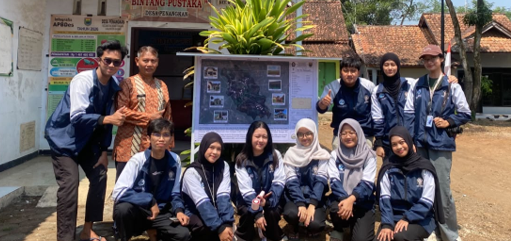
BATANG – A team of Community Service Program (KKN) students from Diponegoro University (UNDIP), through multidisciplinary and community-based programs, contributed to strengthening the potential and empowerment of the community in Penangkan Village, Wonotunggal District, Batang Regency. The initiatives focused on utilizing data for the digitalization of Micro, Small, and Medium Enterprises (MSMEs), promoting data-based waste management education, and developing learning media for early childhood education.
The activities were part of the first Multidisciplinary Program, “BERDAYA (Bersama Membangun Desa Berbasis Data, Edukasi, dan Karya Nyata)”, which translates to “Building Villages Together through Data, Education, and Concrete Actions.” As Statistics students, one of the team’s contributions was the digital collection of data on culinary MSMEs in Penangkan Village. Conducted from July 19 to 24, 2026, the activity involved direct field surveys with MSME owners to collect business profiles and location data.
The collected data were processed using Google Sheets and integrated into an interactive dashboard developed with Shinyapps.io. In addition, QR codes linking directly to the digital dashboard were created and placed on a map of public facilities and MSMEs, providing easier access for both local residents and visitors. This initiative is expected to help introduce Penangkan Village’s culinary MSME potential in a more structured, informative, and accessible manner.
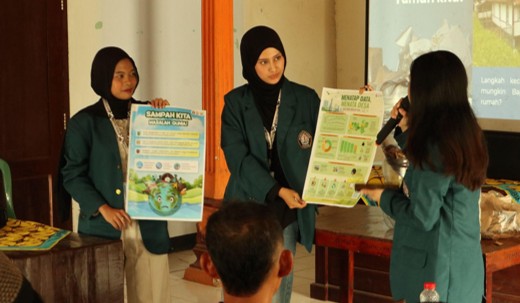
Beyond strengthening the village’s economic sector, the Statistics students also contributed to the second Multidisciplinary Program, “ECO-PENANGKAN (Education, Contextual Learning, and Optimization of Waste Management in Penangkan Village)”. Through this program, the students developed data-based infographics using credible sources to highlight the importance of waste management in Wonotunggal District. The educational materials were disseminated on July 31, 2026, and placed in locations easily accessible to the community, including neighborhood security posts and the Penangkan Village Hall.
The Statistics students also contributed to the Community-Based Science and Technology Program, “Improving Early Childhood Literacy through the GEMA (Gerakan Membaca Anak Usia Dini) Reading Movement,” at KB Mekar Setiabudi on July 29, 2026. As part of the program, the students designed educational media to help children recognize numbers from 1 to 10. The learning media combined visual and audio elements to support children’s counting skills, pattern recognition, understanding of sequences, and vocabulary development.
These initiatives are aligned with the Sustainable Development Goals (SDGs), particularly SDG 4: Quality Education, through strengthening early childhood literacy and learning; SDG 8: Decent Work and Economic Growth, through MSME digitalization and the promotion of local business potential; and SDG 11: Sustainable Cities and Communities and SDG 12: Responsible Consumption and Production, through education on proper waste management.
Through these activities, Statistics was applied not only to data processing but also as a foundation for developing information technology, educational media, and community empowerment initiatives. The resulting MSME dashboard, waste management infographics, and learning media are expected to remain useful to the people of Penangkan Village beyond the completion of the KKN program.
Writer/Reporter: Sesilia Susan Marsela
Photographers: Bernadine Niticetta Dianti Pandyareswari, Annisa Nur Rahmah Awalia